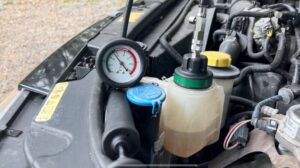
UAE Brake Fluid - DOT 4 vs. DOT 5.1 Which One Should Use

Brake fluid is one of the most critical yet often overlooked components in a vehicle’s braking system. It plays a pivotal role in ensuring that when you press the brake pedal, your car comes to a smooth and controlled stop. In the United Arab Emirates (UAE), where extreme heat, high-speed driving, and heavy traffic are common, selecting the right brake fluid is not just a matter of performance—it’s a matter of safety.

This comprehensive guide will delve into:

  • What brake fluid is and how it works

  • Different types of brake fluids and their classifications

  • Detailed comparison between DOT 4 and DOT 5.1 brake fluids

  • Pros and cons of each type

  • Which brake fluid is best suited for UAE drivers

  • Why RUMANZA Brake Fluid is a top recommendation

  • Maintenance tips for optimal brake performance

By the end of this article, you’ll have a clear understanding of which brake fluid is best for your vehicle, ensuring maximum safety and efficiency on UAE roads.

What is Brake Fluid?

Brake fluid is a specially formulated hydraulic fluid that transfers force from the brake pedal to the brake calipers or wheel cylinders. It operates under extremely high pressure and temperature, making it a vital component in the braking system.

How Brake Fluid Works

  1. Hydraulic Pressure Transmission – When you press the brake pedal, the master cylinder compresses the brake fluid, sending pressure through the brake lines to the calipers.

  2. Force Conversion – The pressurized fluid forces the brake pads against the rotors (or drums), creating friction that slows down or stops the vehicle.

  3. Heat Absorption – Braking generates intense heat, which the fluid must withstand without vaporizing (to prevent brake failure).

Key Properties of Brake Fluid

  • High Boiling Point – Prevents vaporization under heat.

  • Low Compressibility – Ensures immediate brake response.

  • Corrosion Inhibitors – Protects metal components from rust.

  • Hygroscopic Nature – Absorbs moisture over time, which can degrade performance.

Since brake fluid deteriorates with moisture absorption, regular replacement is crucial—especially in hot climates like the UAE.

Types of Brake Fluid: DOT Ratings Explained

The Department of Transportation (DOT) classifies brake fluids based on their chemical composition and performance under heat and moisture. The most common types are:

TypeBaseDry Boiling PointWet Boiling PointCommon Use Cases
DOT 3Glycol-based205°C (401°F)140°C (284°F)Older cars, light-duty vehicles
DOT 4Glycol-based230°C (446°F)155°C (311°F)Modern sedans, SUVs, some performance cars
DOT 5Silicone-based260°C (500°F)180°C (356°F)Classic cars, military vehicles (not for ABS)
DOT 5.1Glycol-based270°C (518°F)190°C (374°F)High-performance, racing, extreme conditi

Why DOT 4 and DOT 5.1 Are Most Relevant in UAE

  • Higher boiling points handle extreme heat better.

  • Compatible with ABS (Anti-lock Braking Systems) found in most modern cars.

  • Better moisture resistance than DOT 3, reducing corrosion risks.

DOT 4 vs. DOT 5.1 Brake Fluid: In-Depth Comparison

1. Boiling Point Performance

The boiling point is the most critical factor in brake fluid selection. If the fluid boils, vapor bubbles form, leading to brake fade (loss of stopping power).

ParameterDOT 4DOT 5.1
Dry Boiling Point~230°C (446°F)~270°C (518°F)
Wet Boiling Point~155°C (311°F)~190°C (374°F)

Why This Matters in the UAE:

  • High-speed driving (common on UAE highways) generates intense brake heat.

  • Stop-and-go traffic in cities like Dubai and Abu Dhabi increases brake workload.

  • Off-roading in deserts demands superior heat resistance.

Verdict: DOT 5.1 performs better under extreme conditions.

2. Chemical Composition & Additives

  • DOT 4 – Standard glycol-based fluid with moderate additives for corrosion protection.

  • DOT 5.1 – Contains advanced additives for:

    • Higher thermal stability

    • Better lubrication

    • Slower moisture absorption

Key Benefit of DOT 5.1:

  • Lasts longer before needing replacement.

  • Better for high-performance cars, luxury vehicles, and heavy-duty SUVs.

3. Compatibility & Mixing

  • DOT 4 and DOT 5.1 are compatible (both glycol-based).

  • Mixing is possible in emergencies, but not recommended long-term (reduces performance).

  • Never mix with DOT 5 (silicone-based)—it can cause system failure.

4. Cost & Availability

  • DOT 4 is cheaper and widely available.

  • DOT 5.1 is more expensive but justified for high-performance needs.

Pros and Cons of DOT 4 vs. DOT 5.1

DOT 4 Brake Fluid

✅ Pros:

  • Affordable and widely available

  • Suitable for most daily-driven cars

  • Good heat resistance for standard driving

❌ Cons:

  • Lower boiling point than DOT 5.1

  • Absorbs moisture faster, requiring more frequent changes

  • Not ideal for aggressive driving or extreme heat

DOT 5.1 Brake Fluid

✅ Pros:

  • Highest boiling point (best for UAE heat)

  • Better moisture resistance (longer lifespan)

  • Ideal for performance cars, towing, and off-roading

❌ Cons:

  • More expensive than DOT 4

  • Overkill for standard commuter cars

Which Brake Fluid Should UAE Drivers Use?

Best Choice for UAE Conditions: DOT 5.1

  • Superior heat resistance for highways and desert driving.

  • Longer service intervals (every 3-4 years vs. 2 years for DOT 4).

  • Recommended for:

    • Sports cars (e.g., BMW, Mercedes-AMG)

    • Luxury SUVs (e.g., Range Rover, Lexus LX)

    • Heavy-duty vehicles (e.g., Toyota Land Cruiser)

When DOT 4 is Acceptable:

  • Budget-friendly option for city driving.

  • Suitable for compact sedans (e.g., Toyota Corolla, Honda Civic).

Why Choose RUMANZA Brake Fluid?

For drivers who demand peak braking performance, RUMANZA Brake Fluid (DOT 5.1) offers:
✔ Exceptional heat resistance (ideal for UAE summers)
✔ Advanced anti-corrosion protection
✔ Longer lifespan, reducing maintenance frequency

Brake Fluid Maintenance Tips for UAE Drivers

When to Change Brake Fluid?

  • Every 2 years for DOT 4.

  • Every 3-4 years for DOT 5.1.

  • Signs of degraded brake fluid:

    • Spongy brake pedal

    • Longer stopping distances

    • Dark or murky fluid color

How to Check Brake Fluid Condition?

  1. Visual Inspection – Fresh fluid is clear or light yellow; dark fluid needs replacement.

  2. Boiling Point Testers – Available at auto shops to check fluid quality.

  3. Professional Flush – Recommended every 2-3 years for optimal safety.

Final Thoughts

Choosing the right brake fluid is critical for vehicle safety, especially in the UAE’s extreme driving conditions. While DOT 4 is sufficient for everyday cars, DOT 5.1 provides superior performance for high-speed, heavy-duty, and luxury vehicles.

For the best results, RUMANZA Brake Fluid (DOT 5.1) is an excellent choice, offering unmatched heat resistance and durability. Regular maintenance and timely fluid changes will ensure your brakes remain responsive and reliable, keeping you safe on UAE roads.

Final Recommendation:

  • Daily commuters → DOT 4 (cost-effective)

  • Performance & luxury cars → DOT 5.1 (RUMANZA recommended)

  • Off-road & towing vehicles → Must use DOT 5.1

By understanding these differences, UAE drivers can make informed decisions, ensuring optimal braking performance and safety. Stay proactive with brake maintenance, and drive with confidence!

FAQs

Brake fluid is a hydraulic fluid that transfers force from the brake pedal to the brake calipers, allowing your car to stop. It must withstand extreme heat and pressure without failing. Without proper brake fluid, your braking system would lose efficiency, leading to dangerous driving conditions.

Due to the UAE’s extreme heat, brake fluid degrades faster. Recommended intervals:

  • DOT 4: Every 2 years

  • DOT 5.1: Every 3-4 years
    Signs you need a change: spongy brakes, longer stopping distances, or dark-colored fluid.

Yes, in emergencies, since both are glycol-based. However, mixing reduces performance, so a full flush is recommended afterward. Never mix with DOT 5 (silicone-based).

Yes! The UAE’s high temperatures demand a brake fluid with a higher boiling point, and DOT 5.1 outperforms DOT 4 in extreme conditions. It’s ideal for sports cars, SUVs, and off-road vehicles.

Using an incompatible type (like DOT 5 in an ABS system) can cause brake failure. Always check your car’s manual or consult a mechanic before selecting brake fluid.

Radiator Stop Leak UAE

Radiator Stop Leak UAE: Quick Fix for Vehicle Cooling System Leaks

Radiator Stop Leak UAE: Quick Fix for Vehicle Cooling System Leaks Discover More Introduction: The Unforgiving UAE Climate and Your Vehicle’s Lifeline The United Arab Emirates’ automotive landscape is defined by extremes. Ambient temperatures that regularly surpass 45°C (113°F), coupled with intense urban congestion and long, high-speed desert drives, create a perfect storm of thermal stress for every vehicle. In this environment, your engine cooling system is not merely a subsystem; it is the single most critical component preventing catastrophic engine failure.
Read More »
Transmission Oil in UAE

What Type of Transmission Oil in UAE Does My Car Need? Your Complete Guide

What Type of Transmission Oil in UAE Does My Car Need? Your Complete Guide Discover More Navigating the vast, sun-baked highways of the United Arab Emirates—from the dynamic urban sprawls of Dubai and Abu Dhabi to the majestic desert dunes and the tranquil mountain passes of the Hajar range—places extraordinary mechanical and thermal stress on every component of your vehicle. While conscientious drivers often prioritize engine oil changes, the vital lifeblood safeguarding the transmission, the complex heart of your car’s

Read More »
UAE Turbine Oil

Guide to UAE Turbine Oil Selection Application & Management for Industrial Facilities

Guide to UAE Turbine Oil Selection, Application, and Management for Industrial Facilities Discover More In the hyper-competitive industrial landscape of the United Arab Emirates, where operational excellence directly translates to economic advantage, turbine lubrication represents a critical nexus of reliability engineering and strategic asset management. This comprehensive guide, developed with technical insights from Rumanza Lubricants, provides an unprecedented deep dive into the science, selection criteria, and life-cycle management of turbine oils specifically engineered for the extreme operating conditions of the

Read More »
Hyderolic Oil in UAE

Synthetic vs. Mineral Hydraulic Oil in UAE : Which is Best for Your Operation?

Synthetic vs. Mineral Hydraulic Oil in UAE : Which is Best for Your Operation? Discover More Across the dynamic landscape of the United Arab Emirates—from the megaprojects of Dubai Marina to the intricate conveyor systems of Jebel Ali Port, from the massive hydraulic shovels in Al Dhafra quarries to the precision automated lines in Abu Dhabi’s industrial cities—the silent, powerful force of hydraulics is indispensable. These systems convert fluid power into monumental force and precise motion. At the core of

Read More »
Pour Point Depressant

What is a Pour Point Depressant? | Benefits, Uses & How It Works Mechanism

What is a Pour Point Depressant? | Benefits, Uses & How It Works Mechanism Discover More In the intricate world of lubricant formulation, few additives play as critical yet understated a role in cold-weather operability as Pour Point Depressants (PPDs). These specialized chemical compounds are the linchpin that prevents machinery from seizing up when temperatures plummet. This in-depth guide goes beyond the basics, exploring the sophisticated chemistry, detailed mechanism, nuanced benefits, and practical considerations of PPDs. We will also examine the
Read More »
Gasoline Engine Oils for UAE

Guide to Gasoline Engine Oils for UAE’s Extreme Climate: Engineering Peak Performance

Gasoline Engine Oils for UAE’s Extreme Climate: Engineering Peak Performance Discover More In the heart of the Arabian Peninsula, the United Arab Emirates stands as a testament to human ambition, with its engineering marvels and endless highways. Yet, this environment of soaring achievement is also one of the most punishing on Earth for machinery. For your vehicle—whether a nimble city sedan, a powerful family SUV, or a high-performance sports car—the UAE’s climate is a relentless adversary. The choice of engine
Read More »
Polyol Ester Oils

What are Polyol Ester Oils & Lubricants – Properties & Applications

What are Polyol Ester Oils & Lubricants – Properties & Applications Discover More In the intricate world of industrial machinery, automotive engines, and advanced refrigeration systems, the choice of lubricant is not merely a maintenance task—it’s a critical engineering decision. While conventional mineral oils have served us for over a century, the demands of modern technology require fluids that can perform under extreme pressure, temperature, and environmental stress. This is where synthetic lubricants, specifically Polyol Ester oils, come to the forefront.
Read More »
Lithium Complex Grease UAE

Guide to Choosing the Right Lithium Complex Grease in UAE

Guide to Choosing the Right Lithium Complex Grease in UAE for Unbeatable Performance Discover More In the heart of a region defined by its ambition and extreme climate, the machinery that builds and powers the UAE operates under immense pressure. From the towering cranes sculpting Dubai’s skyline to the massive haul trucks in Abu Dhabi’s industrial zones and the relentless conveyor systems in Jebel Ali Port, every moving part is a critical link in the chain of progress. Protecting these

Read More »
Lithium Grease UAE

Lithium Grease UAE – Buy Multi-Purpose Lubricant Grease

Lithium Grease UAE – Buy Multi-Purpose Lubricant Grease Discover More In the relentless engine of the United Arab Emirates’ economy—where monumental construction, non-stop logistics, and a climate of extreme heat and abrasive sand are the norm—the battle against friction and corrosion is perpetual. The integrity of a construction crane’s slewing ring, the smooth operation of a delivery fleet’s wheel bearings, and the silent efficiency of a hotel’s HVAC system all hinge on a single, critical decision: the choice of lubricant.

Read More »