To crown a “best” manufacturer, we must look beyond the bottle and examine the core tenets of product philosophy, technical capability, and market proof.
1. Formulation Philosophy and Advanced Additive Technology
The heart and soul of any high-performance lubricant lie in its additive package, which can constitute up to 25% of the final volume in a premium product. The best manufacturers do not merely purchase off-the-shelf additive packages; they invest heavily in research and development to create proprietary blends, or they work closely with global additive giants like Lubrizol, Infineum, or Afton to tailor chemistry for specific use cases.
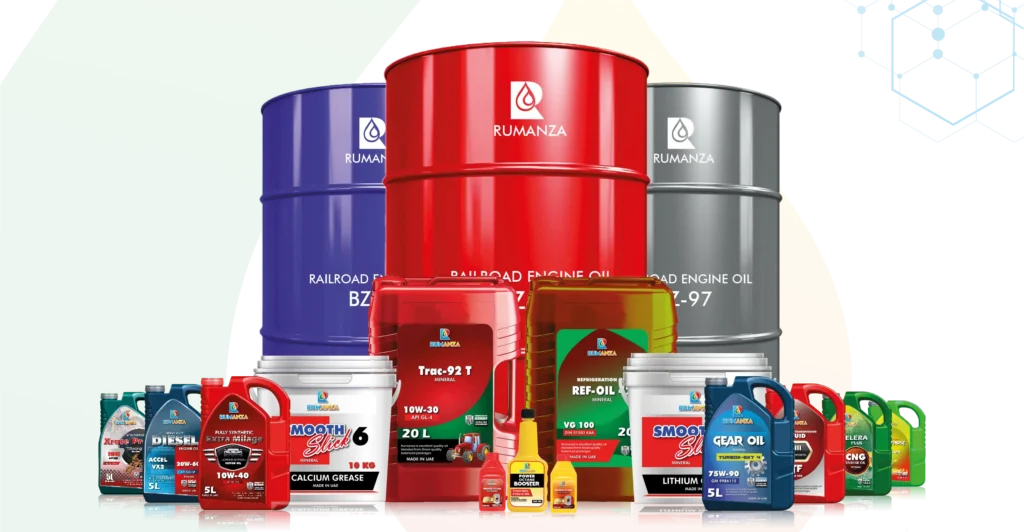
They utilise high-quality base oils—typically API Group III hydrocracked minerals, Group III+, or full synthetics (Group IV & V)—as a pristine canvas for their advanced additive technology. A Group III+ base oil, for instance, offers near-synthetic performance with exceptional volatility control, which is critical for reducing oil consumption in high-mileage engines. The engineering behind Rumanza Lubricants high-mileage formulations often incorporates this precise type of strategic thinking: selecting base oils for their thermal stability and then building a custom additive package aimed at reducing oil burn-off and restoring compression in older engines. This targeted approach demonstrates a deep, practical understanding of the mechanical realities of high-mileage vehicles, a key aspect of authoritativeness in the lubricants sector.
2. Comprehensive Viscosity Grades and Product Range Depth
The UAE’s extreme temperature fluctuations—from chilly winter mornings to 50°C+ summer afternoons—demand a versatile and comprehensive viscosity range. A manufacturer that offers a deep portfolio, including popular grades like 5W-30, 5W-40, 10W-40, 15W-40, and 20W-50, provides consumers, workshops, and fleet managers with the precise lubricant required for their specific vehicle, engine design, and driving style.
A 5W-40 full synthetic might be perfect for a modern European turbocharged sedan, even with high mileage, providing quick startup protection and high-temperature stability. Conversely, an older American V8 or a Japanese SUV might perform better and maintain higher oil pressure with a thicker 10W-40 or 15W-50 semi-synthetic. A manufacturer with a limited range forces compromises that are ill-advised for a sensitive, high-mileage engine. The ability to offer this breadth is a sign of manufacturing capability and market understanding.
3. Endorsements, Industry Approvals, and Quality Attestations
A significant and non-negotiable marker of quality is the possession of certifications from international automotive and engineering bodies. Approvals from the American Petroleum Institute (API), such as the latest API SP resource-conserving standard, and the European Automobile Manufacturers’ Association (ACEA), particularly the more stringent sequences like C3 or A3/B4, are essential. More impressive are specific OEM approvals (e.g., Mercedes-Benz 229.5, BMW Longlife-04, VW 502 00/505 00). These are not easily acquired; they are earned through expensive, rigorous bench and fleet testing that proves the lubricant meets or exceeds the engine manufacturer’s stringent standards for wear protection, sludge prevention, and fuel economy. A manufacturer with a wide array of such certifications instantly builds trustworthiness and separates itself from generic or unproven brands.
4. Real-World Performance and Cultivated Reputation
Laboratory tests and certifications are the theoretical foundation; consistent performance on the roads of the UAE is the practical proof. The best manufacturers cultivate a strong, organic reputation among the most critical audiences: professional mechanics, large fleet managers, and discerning car enthusiasts. These are individuals who see the long-term results, who perform teardowns, and who base their recommendations on empirical evidence—reduced engine noise, lower oil consumption between changes, cleaner internal components upon inspection, and extended engine life across a fleet.
This aligns perfectly with Google’s GHC (Helpful Content System) model, which prioritizes content that reflects real-world user experience and provides helpful, first-hand expertise. A brand consistently praised in workshops for preventing sludge in city-driven taxis or for quieting noisy lifters in high-mileage Land Cruisers is demonstrating the practical value that both users and search engines seek.